Ensayo ecléctico sobre las comedias de terror [Spa/Eng]
Si
hay un dúo dinámico que puede llegar a ser pura dinamita, o todo lo
contrario, nada más que pólvora mojada, es el que nace de la
colaboración entrañable entre terror y comedia. Esta hermandad de
géneros nos ha regalado incontables obras maestras, como la
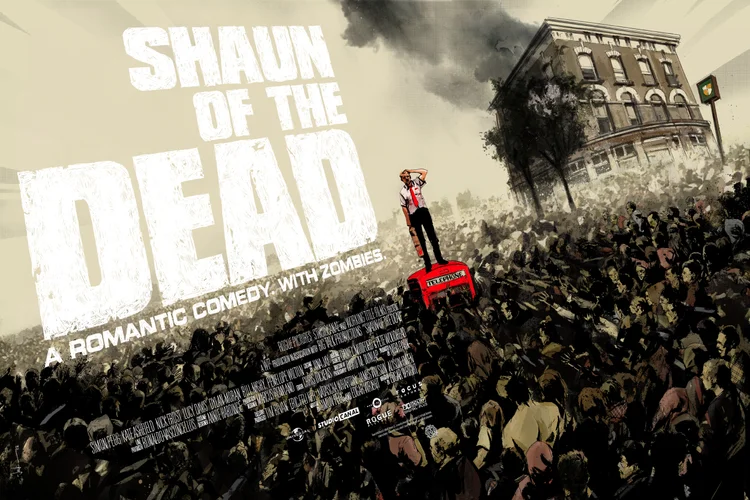
irremplazable Shaun of the Dead (2004), la hilarante What We Do In The Shadow (2014) y el gran homenaje meta de One Cut of the Dead (2017), pero también ha dado lugar a la producción de mucho material para el olvido entre películas que no supieron encontrar el balance entre ambas narrativas y la inagotable cultura del refrito en las sagas paródicas.
Y es que si nos atenemos a los hechos, la cartelera de los cines no suele contar con una amplia variedad de opciones para los amantes del género, y es por eso que las grandes productoras parecen haber llegado a la conclusión de que la única forma de volver más digerible el terror para la mayoría es empaquetarlo en una comedia. No habría nada malo con eso de buenas a primeras, pero el gran problema es que no muchas están dispuestas a trabajar el tiempo suficiente en la creación del corazón de toda buena comedia: un guion sólido.
El error que suele cometerse es considerar que los personajes son los que tienen que ser graciosos, es decir, generar conscientemente la risa en el otro. Sin embargo, el efecto humorístico más genuino deviene del contraste entre la vida de los personajes y las situaciones en las que se encuentran insertos. El espectador es quien a la distancia, sin atravesar la realidad que viven estos personajes, puede hacer las conexiones entre el todo y encontrar en lo espontáneo, la coincidencia y lo fortuito el elemento cómico. Ninguno de los protagonistas de las películas anteriormente mencionadas busca ser gracioso; todo lo contrario, lo que nos da risa es cómo viven su vida o reaccionan frente a los hechos que se van desarrollando en el contexto que habitan.
La buena noticia de nuestro tiempo es que el terror se ha convertido en un género de gran interés para producciones independientes, y este influjo de nuevas voces, propuestas o temáticas ha logrado revitalizar una vez más el campo de juego. Inclusive en el caso de Ari Aster (Midsommar, Hereditary, Beau is Afraid) podríamos aducir que el terror le dio un campo de experimentación al momento de consolidar su visión como director y le abrió un camino de reconocimiento dentro de la industria cinematográfica. En nuestro país, el Festival Buenos Aires Rojo Sangre (BARS) sigue siendo aún después de 23 años uno de los mayores espacios de propulsión, convergencia y difusión del género tanto a nivel nacional como internacional: a él le debemos disfrutar en salas de cine de cada nueva promesa o descubrimiento con el que nos topamos por más independientes que sean.
Ahora bien, si nos lanzamos a revisar el historial de temas que comienzan a resonar cada vez más en el terror, o ya míticamente en la ciencia ficción, veremos que la insurgencia de la tecnología parece cobrar un matiz progresivamente más perturbador y siniestro. Sin ir tan lejos, la pandemia misma y las restricciones de la cuarentena dieron lugar al resurgimiento de las narrativas de infectados, siendo The Sadness (2021) definitivamente una de mis favoritas, pero también a experimentar en tono tétrico la virtualización de las relaciones que lleva consigo el aislamiento como sucede en Host (2020). Si bien en ambas propuestas la comedia ha quedado despejada de la ecuación, quisiera quedarme con la última película de referencia para trazar el derrotero creativo que hace uso de la tecnología como medio o mediatización del horror. Es importante resaltar que no se trata del terror tecnológico, como es el caso de Megan (2022), que tiene a lo técnico como antagonista, sino más bien como catalizador o, hasta en cierta forma, garante de la violencia pero en su instancia de conectividad, de intermediario en los vínculos humanos, más en sintonía con apuestas como Black Mirror (2011/-).
En Host, la reclusión de la cuarentena lleva a un grupo de amigos con ganas de experimentar lo paranormal a organizar una sesión espiritista por Zoom. Sí, haber tenido tanto tiempo de sobra durante la pandemia nos ha llevado a tomar decisiones desacertadas. Al menos en eso puedo identificarme. Ya respecto a todo lo demás, prefiero quedarme de espaldas al hecho en la vereda de enfrente. Pero volviendo a la película, aquí la tecnología funciona como un canal de contacto con las fuerzas demoníacas que permite realizar el mismo ritual, antes in situ, en la comodidad de sus hogares a través de la magia de internet. Algo parecido sucede con Unfriended (2014), película que se proclama como la precursora de estas películas screenlife (pantalla de computadora) y que manifiestan esta transición tecnológica del found footage (metraje encontrado) a la caja negra que representa cada computadora.
Ahora bien, ¿a qué me refiero cuando hablo de mediatización del horror? De buenas a primeras, este tipo de terror ya no recae en los eventos paranormales más allá de nuestra percepción, sino que está más bien cerca, aunque no por eso más tangible para nosotros; se la pasa merodeando alrededor nuestro, determinando nuestra forma de pensar y de comportarnos, protegido en el anonimato pero con la fuerza abrasiva de una sentencia personalizada. El infierno de las redes sociales y su violencia coercitiva da lugar a este nuevo tópico cada vez más popular. A continuación le traigo dos propuestas relativamente recientes, que ahondan en la violencia mediatizada a través de los servicios de streaming en vivo, aunque con resultados opuestos: Deadstream (2022) y Spree (2020).
Protagonizada por el ya reconocible Joe Keery (Stranger Things), Spree es un thriller satírico de terror que narra la odisea sangrienta de un adolescente perturbado que busca hacerse viral cueste lo que cueste. Hasta aquí tenemos muchos elementos que podrían funcionar espectacularmente bien en ensamble, especialmente si le damos unos puntos iniciales por el juego de palabras entre el nombre de la aplicación que usa el personaje para conseguir pasajeros (Spree, traducido como juerga, racha u oleada) y la vorágine salpicada de sangre que solo dura un día. Inclusive la obsesión que va construyendo Keery en torno a su personaje resulta bastante convincente, pero la tibieza con la que el guion aborda la sátira hace que tanto la actuación de su protagonista como la totalidad de la película colapsen de inefectividad.
Es curioso que ni siquiera logre hacer pie en al menos uno de los dos flancos que se propone: no resulta ni remotamente graciosa en ningún momento, y hasta me atrevería a decir que el frenesí del que se jacta el título no llega a rozarnos ni por asomo, y tampoco se la juega a representar crudamente la violencia incremental de un joven que va cayendo en la locura. No es que tenga un particular interés por el gore, pero realmente todo pareciera transcurrir fuera de escena e inevitablemente le quita la carga acumulativa a los hechos que narra. Creo que su principal falla es la falta de progresión que tiene la historia, es como si se tratara de un recorrido indolente por el punto de quiebre de un personaje perturbado. Nada genera distancia porque no llega a impactar de ninguna forma. La verdad es una lástima porque me parecía una apuesta interesante, pero el resultado me dejó un sabor insulso.
En el caso de Deadstream, todos los elementos que hemos ido mencionando como factores imprescindibles en una buena comedia de terror están integrados en su punto justo para ofrecernos una opción moderna, inteligente e hilarante de leyendas urbanas dentro del variopinto universo de los creadores de contenido. Shawn (mucha coincidencia como para no ser un homenaje al Shaun británico), un youtuber caído en desgracia luego de una controversia, decide hacer su regreso triunfal a las redes de la mano del único sponsor que le sigue poniendo fichas. Su única condición es que respetando la esencia de su canal, “experiencias en las que tenga que enfrentarse a sus miedos”, Shawn deberá explorar de lleno una casa embrujada y transmitir en vivo su estadía nocturna sin posibilidad de arrepentirse. Así de genial como suena, la película logra superarse aún a sí misma, y con creces.
Realmente es para destacar el enorme trabajo a pulmón del matrimonio Winter (Vanessa y Joseph), quienes se cargan al hombro en su debut directoral también la producción, edición y guion de la película, y eso sin contar que el propio Joseph se encarga de encarnar a la perfección a este youtuber políticamente incorrecto pero necesitado de la aprobación de su público. Su actuación es el motor a vapor de esta joyita del cine independiente que nada tiene que envidiarles a las grandes producciones, logrando mantenernos siempre al borde del asiento temiendo a la par de su personaje cualquier ínfimo sonido, crujido o temblor que capte la cámara, pero sin dejar de atacarnos por oleadas de una risa contagiosa por las vicisitudes de nuestro protagonista. Acá parezco ya haberlo adoptado como uno más de los entrañables, y efectivamente están en lo correcto: miedoso, egoísta, ocurrente, sincero y tan real. Shawn cumple su cometido de generarnos empatía y de proyectar en él nuestra propia experiencia recorriendo esa casucha abandonada. Pero principalmente porque vemos la presión que ejerce su comunidad, instandolo a que se arroje cada vez más al peligro, solamente para su propio entretenimiento. Aún aquellos que genuinamente parecen quererlo, ayudan a la distancia por medios interactivos pero sin dar un paso más allá de la virtualidad.
Desde cualquier área técnica, aunque especialmente desde el punto aparte que representan los efectos prácticos, Deadstream es una carta de amor al cine de terror independiente que te mantiene electrizado de principio a fin con una sonrisa en la cara.
[Translation]
If there is a dynamic duo that can become pure dynamite, or quite the opposite, nothing more than wet gunpowder, it is the one born from the endearing collaboration between horror and comedy. This brotherhood of genres has given us countless masterpieces, such as the irreplaceable Shaun of the Dead (2004), the hilarious What We Do In The Shadow (2014) and the great meta homage of One Cut of the Dead (2017), but it has also given rise to the production of a lot of material destined to oblivion between films that did not know how to find the correct balance between both narratives and the inexhaustible culture of rehash in parody sagas.
And if we stick to the facts, the theatrical billboard does not usually have a wide variety of options for genre lovers, and that is why the big producers seem to have come to the conclusion that the only way to make horror more digestible for the majority is to package it in a comedy. There would be nothing wrong with that right off the bat, but the big problem is that not many are willing to put enough time into creating the heart of any good comedy: a solid script.
The mistake often made is to consider that the characters are the ones who have to be funny; that is, to consciously make others laugh. However, the most genuine humorous effect comes from the contrast between the lives of the characters and the situations in which they are inserted. The spectator is the one who from a distance, without going through the reality that these characters live, can make the connections between the whole and find in the spontaneous, the coincidence and the fortuitous the comic element. None of the protagonists of the previously mentioned films seeks to be funny; on the contrary, what makes us laugh is how they live their lives or react to the events that develop in the context they inhabit.
The good news of our time is that horror has become a genre of great interest for independent productions, and this influx of new voices, proposals or themes has managed to revitalize the playing field once again. Even in the case of Ari Aster (Midsommar, Hereditary, Beau is Afraid) we could adduce that horror gave him a field of experimentation at the time of consolidating his vision as a director and opened a path of recognition within the film industry. In our country, the Buenos Aires Rojo Sangre Festival (BARS) continues to be, even after 23 years, one of the major spaces of propulsion, convergence and diffusion of the genre both nationally and internationally: we owe it to him to enjoy in movie theaters every new promise or discovery we come across, no matter how independent they may be.
However, if we launch ourselves into a review of the history of themes that are beginning to resonate more and more in horror, or already mythically in science fiction, we will see that the insurgence of technology seems to take on a progressively more disturbing and sinister hue. Without going that far, the pandemic itself and the restrictions of quarantine gave rise to the resurgence of infected narratives, being The Sadness (2021) definitely one of my favorites, but also to experience in a gloomy tone the virtualization of relationships that carries isolation with it as it happens in Host (2020). Even though comedy has been removed from the equation in both proposals, I would like to keep the last film mentioned as reference to trace the creative path that makes technology a medium or mediatization of horror. It is important to emphasize that it is not about technological terror, as it is the case of Megan (2022), which has a technical creation as an antagonist, but rather as a catalyst or, even in a certain way, guarantor of violence but in its instance of connectivity, as an intermediary in human bonds, more in tune with bets such as Black Mirror (2011/-).
In Host, the seclusion of quarantine leads a group of friends eager to experience the paranormal to organize a seance by Zoom. Yes, having had so much time to spare during the pandemic has led us to make unwise decisions. At least I can relate to that. And regarding everything else, I prefer to stay with my back to the whole situation on the opposite sidewalk. But returning to the film, here technology works as a channel of contact with demonic forces that allows the same ritual, previously in situ, to be performed in the comfort of their homes through the magic of the Internet. Something similar happens with Unfriended (2014), a film that proclaims itself as the precursor of these screenlife films and that manifests this technological transition from found footage to the black box that represents each computer.
Now, what do I mean when I talk about the mediatization of horror? Right off the bat, this type of terror no longer relies on paranormal events beyond our perception, but is rather closer, although not for that reason more tangible for us; it lurks around us, determining our way of thinking and behaving, protected in anonymity but with the abrasive force of a personalized sentence. The hell of social networks and their coercive violence gives rise to this new and increasingly popular topic. Below I bring you two relatively recent proposals, both of which delve into mediatized violence via live streaming services, albeit with opposite results: Deadstream (2022) and Spree (2020).
Starring the already recognizable Joe Keery (Stranger Things), Spree is a satirical horror thriller that chronicles the bloody odyssey of a disturbed teenager who seeks to go viral at all costs. So far we have many elements that could work spectacularly well in ensemble, especially if we give a few initial points for the pun between the name of the application that the character uses to get passengers and the blood-splattered maelstrom that only lasts one day. Even the obsession that Keery builds around his character is quite convincing, but the lukewarmness with which the script approaches satire makes both the performance of his protagonist and the entire film collapse of ineffectiveness.
It's curious that it doesn't even manage to get its footing on at least one of the two flanks it proposes: it's not even remotely funny at any point, and I would even go so far as to say that the frenzy boasted in the title doesn't even come close to touching us, and neither does it play at crudely representing the incremental violence of a young man who is falling into madness. It's not that I have a particular interest in gore, but really everything seems to take place offstage and inevitably takes the cumulative burden off the events he narrates. I think its main flaw is the lack of progression that the story has, it's as if it were an indolent journey through the breaking point of a disturbed character. Nothing generates distance because it fails to make an impact in any way. In truth, it is such a pity because it seemed like an interesting bet but the result left me with a bland taste.
In the case of Deadstream, all the elements that we have been mentioning as essential factors in a good horror comedy are integrated in their right point to offer us a modern, intelligent and hilarious option of urban legends within the diverse universe of content creators. Shawn (too much coincidence not to be a tribute to the British Shaun), a YouTuber fallen out of favor after a controversy, decides to make his triumphant return to the networks by the hand of the only sponsor who keeps on giving him a vote of confidence. His only condition is that while respecting the essence of his channel, "experiences in which he has to face his fears", Shawn must explore a haunted house and broadcast live his nightly stay with no chance of going back on his words. As great as it sounds, the film still manages to surpass itself, and by far.
It is really worth highlighting the enormous work of the Winter couple (Vanessa and Joseph), who shoulder in their directorial debut also the production, editing and script of the film, and that without taking into account that Joseph himself is responsible for perfectly embodying this politically incorrect youtuber but in need of the approval of his audience. His performance is the steam engine of this little gem of independent cinema that has nothing to envy to the big productions, managing to keep us always on the edge of our seat, fearing along with his character any tiny sound, crackle or tremor captured by the camera, but without ceasing to attack us in waves of contagious laughter at the vicissitudes of our protagonist. Here I seem to have already adopted him as one of the endearing ones, and indeed you are right: fearful, selfish, witty, sincere and so real. Shawn does a good job on generating empathy and projecting onto him our own experience walking through that abandoned shack. But mainly because we see the pressure exerted on him by his community to throw himself more and more into danger just for their own entertainment. Even those who genuinely seem to like him, they only help from a distance by interactive means but without taking a step beyond virtuality.
From any technical area, though especially from the standpoint of practical effects, Deadstream is a love letter to independent horror cinema that keeps you electrified from start to finish with a smile plastered on your face.
Comentarios
Publicar un comentario